Take Full Control of Your Self-Employed Retirement Funds

Maximize Your Retirement Savings with a Solo 401(k)

$899 FLAT ANNUAL FEE, NO TRANSACTION FEES!

Book A Free Consultation

Small-business-owner-retirement-account-home-office
Why Choose IRAR

Don't Let Anything Fall Through the Cracks! The IRS Will Catch It.

Our platform helps you track your personal Solo 401(k) plan's debits and credits. It also segregates the distinct types of contributions, allocating the funds in the proper plan sources. This keeps your plan compliant with IRS rules. This is something that no other platform can do. 

 
IRAR's Solo 401(k) Retirement Plan is 100% Self-Directed

Experience the Highest Level of Compliance & Efficiency 

Our one-of-a-kind online Solo 401(k) platform includes free premium recordkeeping features to help you follow plan rules— it's super easy to use. Here are a few of the many benefits it offers:

  • Unlimited Plan Participants
  • Roth Solo 401(k) 
  • Alternative Asset Investments
  • Allowed Loan up to $50,000
  • Preparation IRS Form 5500-EZ, 1099-R
  • FREE Plan Restatements
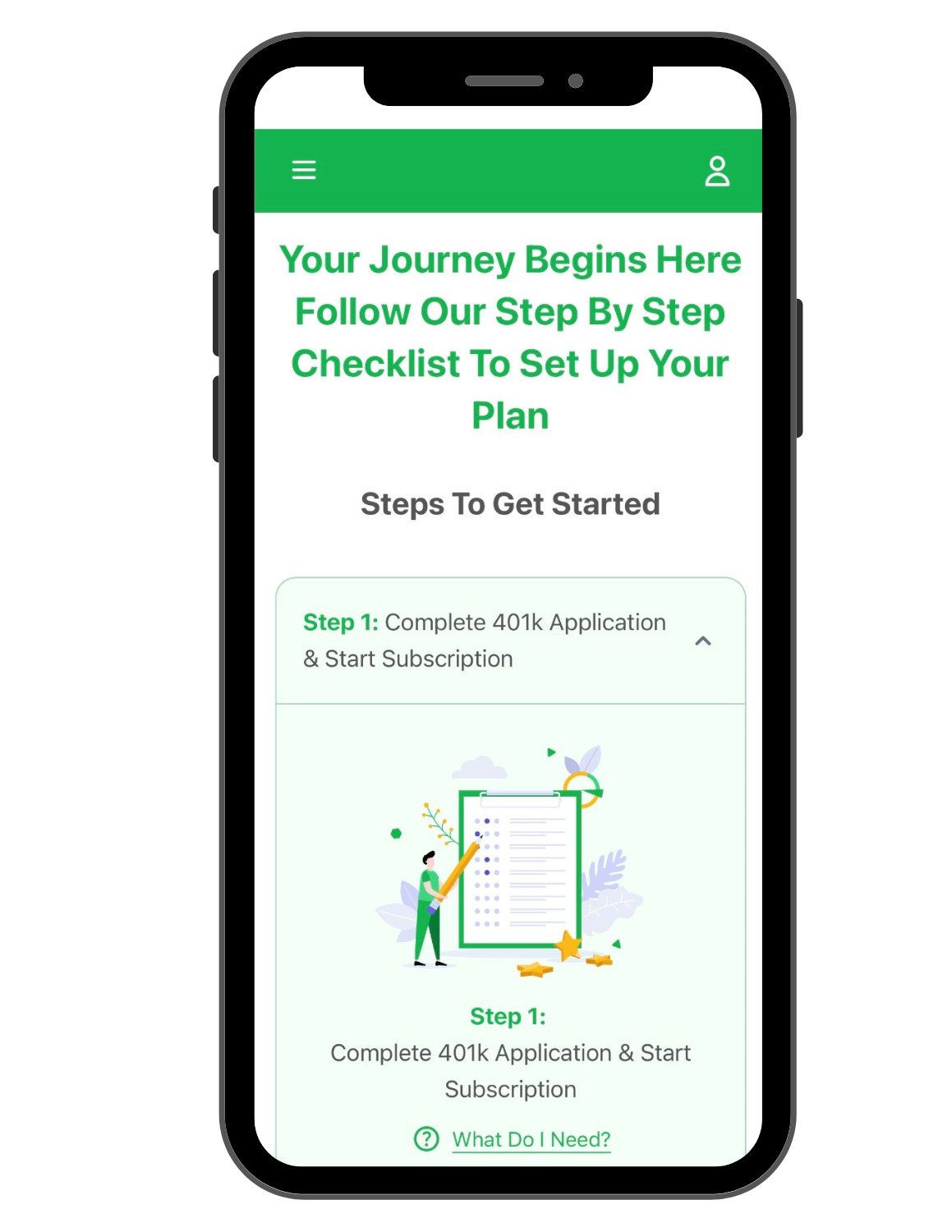
Solo-401k-mobile
REQUEST A Demo

Interested in a Self-Directed Solo 401(k) for Your Small Business?

Schedule a one-on-one demo of our platform. Discover how you can effortlessly maintain and track your Solo 401(k) investments, efficiently managing your time and money, while ensuring full compliance with IRS regulations for your account.

Schedule a Free Consultation

Simple & Transparent Pricing

Premium features and recordkeeping platform at an affordable rate.

Solo 401(k) Retirement Plan

The annual fee includes:

  • Unlimited buys and sells
  • Plan Document
  • Preparation of Form 5500-EZ
  • Plan Restatements
  • Unlimited transactions
  • Online recordkeeping with premium features
$899/yr
-$500/yr
Tax Credit
$0/yr

No transaction fees.
One flat annual rate.

From a user standpoint, the IRAR platform is easy to use. I log in monthly to reconcile accounts and handle tasks, and we've already made our first investment through the Solo 401(k). I really value the flexibility, it’s even got me thinking about moving more funds from my IRA to keep diversifying. Everyone I’ve worked with at IRAR has been incredibly friendly and helpful. When technical issues came up, they jumped on calls, walked me through solutions, and helped me understand both the back-office process and the investment rules for the Solo 401(k).

Dante Passantino
REALTOR® and IRAR Client

Understanding the Self-Employed 401(k)

Eligibility

You can set up a Solo 401(k) plan if you do not have any full-time employees. If your spouse works for the business, they’re also eligible to save.

How it Works

A Solo 401k allows you to contribute to your retirement savings in two ways: as an employee with salary deferrals from your business income (considered your compensation) and as the employer with profit-sharing contributions.

As the Solo 401(k) plan administrator, you find, buy, sell, and manage the assets and retirement funds. It's important to segregate your plan from personal finances and business expenses. Proper recordkeeping will help you maintain the tax benefits of your Solo 401(k).

Solo 401(k) Frequently Asked Questions

What is a Solo 401(k)? 

A Solo 401k is a retirement plan for self-employed individuals or business owners with no other employees. This employer sponsored plan allows the business owner's spouse to participate in the plan. This plan allows high contribution limits. Both employee and employer contributions are allowed, helping the business and the owner lower their taxable income. This plan is also known as Individual 401(k), Self-employed 401(k), Personal 401(k), and One-Participant 401(k).

Can you open a Solo 401(k) without an employer? 

No. Regular 401(k)plans are employer-sponsored retirement plans. However, if you have a small business with no employees, a Solo 401(k) lets you save for retirement. You can make contributions to the plan as both employer and employee and enjoy tax benefits.

Can I open a Solo Roth 401(k) on my own? 

Yes. Anyone who has a business with no employees can open a Solo Roth 401(k). You can do this on your own by completing an online application.

How do I open a Solo 401(k)? 

To open a Solo 401(k) you must have earned income from a business with no employees. You will need an EIN for the Solo 401(k), an EIN for the business, a checking account, and a compliant recordkeeping platform. You do not need an LLC unless that is part of your investment strategy.

What is the contribution deadline for a Solo 401(k)? 

The contribution deadline for a Solo 401(k) is usually the employer’s tax return due date plus extensions. For corporations, employee contributions must be deposited within 7 business days after each payroll period. Contributions can be made by both the employer and employee. Since this plan is considered an owner-only plan by the IRS, the employee is also the owner. The District of Columbia's Emancipation Day holiday sometime falls around the same time, and the tax deadline is pushed out a few days for sole proprietors and C-Corporations.

When does a Solo 401(k) need to be established? 

The last day to establish a Solo 401(k) plan for the tax year is the tax return due date plus extensions of the employer (statutory deadline). This deadline is also when employer contributions must be made. If an employer chooses to make an employee contribution, there is an earlier deadline of April 15 for sole proprietors and partnerships. For Corporations the deadline is 7 business days after the end of the calendar year. If the employer chooses to make an employee contribution, the plan will need to be established before the statutory deadline since the plan must be established before any contributions are made.

The deadline to open a Solo 401(k) for a given tax year is your tax return due date, including extensions. That’s also the deadline to make employer contributions.

However, if you want to make employee contributions:

  • Sole proprietors and partnerships must contribute by April 15 (without extensions).
  • Corporations must contribute within 7 business days after the end of the calendar year.

Important: To make employee contributions, the plan must be established before the statutory deadline—because the Solo 401(k) must exist before any contributions are made.

Can a sole proprietor have a Solo 401(k)? 

Yes, sole proprietors can open and contribute to a solo 401(k) plan. Also known as a one-participant 401(k), this retirement plan is designed for self-employed individuals and business owners with no employees other than a spouse. It offers the same tax benefits and high contribution limits as traditional 401(k) plans.

What Is the Solo 401(k) Auto-Enrollment Credit? 

This IRS tax credit allows you to claim $500 annually for three consecutive years if your Solo 401(k) includes an Eligible Automatic Contribution Arrangement (EACA). Unlike a tax deduction, which reduces taxable income, a tax credit directly reduces your tax liability, providing more impactful savings.

Key Benefits

The annual fee includes:

  • Up to $1,500 in Tax Savings: Claim $500 per year for three years
  • Dollar-for-Dollar Tax Reduction: More impactful than a deduction.
  • Promotes Consistent Saving: Auto-enrollment encourages regular contributions with the flexibility to opt out if you choose.

Resources


Monitor Contributions and Tax Treatment

Our platform tracks contributions by type. Pre-tax elective deferrals generally reduce your current taxable income, while distributions are generally taxed as income when withdrawn.

Roth Solo 401(k) contributions are made with after-tax dollars and are not deductible. Qualified distributions are tax-free when the applicable five-year participation period and another qualifying condition, such as reaching age 59½, are met. Accurate recordkeeping helps maintain the proper tax treatment of each contribution type.

Solo 401(k) Contribution Limits

2025 and 2026 Total Contribution Limits

The combined employee and employer contributions to a participant’s account, excluding catch-up contributions, cannot exceed the lesser of 100% of eligible compensation or:

  • $70,000 in 2025
  • $72,000 in 2026

Employer contributions are generally limited to 25% of eligible compensation. A special calculation applies to self-employed individuals. Review the employee and employer contribution limits before making a contribution.

2025 and 2026 Employee Elective Deferrals

Employee elective deferrals are limited to 100% of eligible compensation, up to:

  • $23,500 in 2025
  • $24,500 in 2026

If permitted by the plan, participants age 50 or older may make an additional catch-up contribution of $7,500 in 2025 or $8,000 in 2026.

Participants who turn 60, 61, 62, or 63 during the calendar year may make a higher catch-up contribution of $11,250 in 2025 or 2026. This higher amount replaces the standard age 50 catch-up contribution for that year.

Our platform tracks employee deferrals, employer contributions, and catch-up contributions separately.

Build Retirement Wealth With A Solo 401(k) For Solopreneurs. 

Get Your Free Solo 401(k) Guide Now