





A career in healthcare and commercial real estate gave Lon Mapes years of experience helping healthcare organizations manage one of the most important assets they need: real estate. Along the way, he built valuable knowledge and relationships that would later shape different parts of his journey. For Lon Mapes, that realization led him to explore self-directed retirement investing with alternative assets.
Setting the Foundation
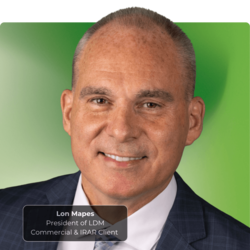 Early in Lon's professional journey, he worked as an auditor for healthcare systems, specializing in identifying errors in hospital reimbursements. The business was successful, but Lon recognized that larger accounting and consulting firms were entering the space and offering similar services. Rather than compete directly with larger corporations, Lon decided to pursue real estate and developed a strong interest in the commercial sectors
Finding His Niche
Lon eventually established his own brokerage, where he began focusing heavily on healthcare real estate. Through his work, he recognized a significant need among healthcare providers, such as finding properties that could meet the unique requirements of medical use. For investors interested in medical commercial real estate, there are several important factors to consider:
- Commercial properties are commonly categorized as Class A, B, or C based on factors such as age, location, condition, and amenities. While each class can present different investment opportunities, parking is an especially important consideration for medical properties. Healthcare facilities may serve a steady flow of patients, staff, and visitors, making adequate and accessible parking critical.
- Ventilation can be one of the most important and costly systems to evaluate when considering an existing property. Medical offices and healthcare facilities often have ventilation requirements that differ significantly from those of traditional retail or office buildings. Understanding a building’s current capabilities is essential.
- Medical office properties can accommodate a wide range of healthcare-related uses, including physician practices, specialty clinics, urgent care centers, and outpatient facilities. Each type of use can have its own operational and physical requirements, creating different opportunities for investors.
For Lon, these considerations became more than just part of his professional expertise. They began to shape the way he looked at real estate as an investment. His understanding of healthcare, combined with his experience of evaluating commercial properties, has allowed him to recognize opportunities that are not apparent to someone unfamiliar with the industry.
He saw the sector’s underlying demand as one of the reasons healthcare real estate had remained successful over the years, and the pandemic further reinforced his view of the sector’s resilience compared with other areas of commercial real estate.
As people live longer and healthcare needs continue to grow, demand for medical facilities is also increasing. At the same time, medical uses are increasingly moving into properties that were not originally designed for healthcare, including retail centers and traditional office buildings.
Lon has firsthand experience with these types of conversions. In one project, he worked on transforming a large former mortgage call center into medical office space. The project demonstrated how factors such as building systems, layout, and parking can play a critical role in determining whether a property can successfully transition to medical use. Experiences like this helped shape Lon’s strategy.
Turning Professional Experience Into an Investment Strategy
As Lon's business grew, he began thinking more seriously about retirement.
“I realized that I needed to get smarter about planning my retirement,” Lon said. “Since I’m a business owner, I have to think about these things.”
He began researching his options and discovered that a self-directed retirement account could give him access to investment opportunities that were not available through many traditional retirement platforms.
For Lon, that meant the ability to invest in syndicated real estate opportunities. “My goal was I wanted to be able to invest in syndicated real estate deals, specifically in medical real estate,” he explained. That distinction mattered.
Lon was not looking for another investment account. He was looking for a retirement structure that could accommodate the types of investments he understood and already encountered through his professional network.
“A lot of the other providers just don’t allow that,” he said. “For me, IRAR Trust Company opens that up, and so many people don’t know they’re able to invest this way.”
From a Self-Directed IRA to a Solo 401(k)
Lon initially began exploring the possibility of using a Self-Directed IRA for his retirement investing. As he spoke with qualified representatives at IRAR Trust Company and learned more about the available structures, he was introduced to the Solo 401(k) option.
During this complimentary consultation, Lon discovered that a Solo 401(k) was a better fit for his situation as a business owner, and it provided him with additional retirement planning and contribution flexibility.
Here are some reasons why small business owners like Lon choose a self-directed 401k:
- Greater contribution flexibility: A Solo 401(k) allows eligible business owners to contribute in both an employee and employer capacity, potentially providing greater retirement contribution opportunities.
- Participant loans: IRAR’s Solo 401(k) plan offers participants the ability to borrow from their retirement account, subject to applicable rules and plan terms.
- Roth option: A Solo 401(k) also provides the option to make Roth contributions, giving business owners another way to approach the tax treatment of their retirement savings.
- Self-directed investment options: Depending on how the plan is structured, account holders can have greater control over how their retirement funds are invested, including access to certain alternative assets like real estate.
Review all the Solo 401(k) benefits, Learn More
Today, Lon has been able to use his self-directed 401(k) to invest in the real estate syndications and lean in on his expertise by properly identifying what to look for in these medical commercial properties.
Lon’s only regret, he wishes he started sooner.
A Partner for the Journey
Lon also has a message for like-minded investors who have not yet prioritized retirement planning.
“Start now and don’t wait. I think the sooner that you do it, the better,” he said.
His reasoning is simple. Time can be one of the most valuable components of long-term investing. Investments in real estate, land, and other alternative assets can provide opportunities for long-term growth and, in some cases, compounding returns. Lon also shares that investing is not only about starting early. It is also about making informed decisions about where and how those retirement dollars are invested.
Lon’s final tip is to look beyond the property itself.
“You’re not just investing in the real estate,” he explained. “You really have to know the developer because the real estate is very important, but the people behind the deal are important too.”
For Lon, relationships and trusted partners are an important part of the investment process. His experience with IRAR Trust Company ultimately came down to flexibility, education, and having a team available to help him navigate the process.
“I’m a very big fan of IRAR Trust Company,” he said. “I like how it works. It’s relatively straightforward, and it allows me to do what I want to do, invest in those syndicated real estate deals. The team has also been great to work with and has helped me along the way.”
For investors interested in exploring self-directed retirement investing, having a trusted custodian and knowledgeable support team can make the process easier to understand and navigate. IRAR Trust Company is available as a resource.
If you are interested in learning whether a Self-Directed IRA, Solo 401(k), or another retirement structure may align with your goals, schedule a free consultation today.





Comments (0)